A few days ago, my little brother gave me a good idea for a story.
And yes, I kind of stole it. I'm a pirate after all, right?
But anyway, I immediately recognized that some of the characters I made up years ago fit perfectly into the plot for this story. And then I realized I didn't have a setting. So I sat down at my desk at 1:30 to do a little bit of worldbuilding. I drew a small map on an index card, then made up a whole bunch of fantasy-sounding names. Then I drew the outline for a larger map in my nice sketchbook.
I looked at the clock. It was 3:45. Time for me to go to a choir rehearsal thing. When I got back at 6:00, I sat back down to do some more, but my dad called us to the table for dinner. After dinner, I drew a medium-sized map with mountains and rivers as well as the names for all the mountains and rivers. It's now 8:00. And I realize I have geometry homework to do.
Being in high school can be hard. I have a major test coming up this week and an essay to write. Not to mention that geometry. And that's not all. I have to do fifty note cards on the Salem Witch Trials by Thursday! And here I am, trying to plan for a book as well.
There's a very delicate balance between what we can do and what we can't do. And sometimes we have to either walk that line, or make sacrifices to stay on the 'can do' side. I can't do my geometry and still have time for worldbuilding. I have school tomorrow! I have to get to bed on time. And my world is laying itself out so well for me right now. That might not be the case later. So, I have to choose.
Of course, I know that I should do my geometry homework. That's not the point I'm trying to make. The point is that we have to decide how much we're going to sacrifice for writing. If I do my worldbuilding tonight, my grade will drop. I'll have had more fun, and possibly gotten closer to my eventual goal of getting published, but what's more important? School or writing?
Writing is important. It's important to writers. It's important to readers. But what we need to realize is that there are things more important than writing. And we need to be careful not to miss great experiences because we would rather be writing.
The other day, there was a kite festival. Me and my mom and some of my little brothers decided we'd go, but we also had plans to go see a movie so we were going to leave early. One of my brothers stayed home and I almost stayed with him. But I like flying kites so I went. My brothers went home only about half an hour after we got there, but I stayed, flying my mom's amazing boat kite. My mom came back and we kept flying our kites. When it came time to leave, we called my dad and said that we'd like to stay just a little longer. So, they came to pick us up in the car. Well, the way it worked out, we missed the movie and had to go to a later showing. But it was worth it. Completely, 100% worth it. I didn't mind missing the movie at all.
I got to spend time with my mom and my little brothers. In the end, that's probably the most important thing of all. More important than reading or writing, or school, or pretty much anything else.
And if you'll excuse me, I have some unfinished geometry homework to see to.
Tuesday, September 28, 2010


Monday, September 27, 2010
Speak Loudly: Banned Book Week
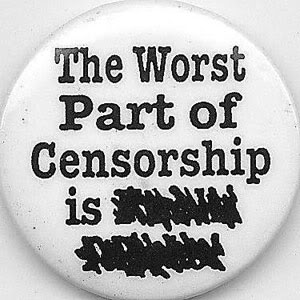
Banned Book Week is here . . . and the NY TIMES put out a list of 10 ways to celebrate the week. And what were last year's ten top challenged books? Here's the list:
1. ttyl; ttfn; l8r, g8r (series), by Lauren Myracle
Reasons: drugs, nudity, offensive language, sexually explicit, unsuited to age group
2. And Tango Makes Three, by Peter Parnell and Justin Richardson
Reasons: homosexuality
3. The Perks of Being A Wallflower, by Stephen Chbosky
Reasons: anti-family, drugs, homosexuality, offensive language, religious viewpoint, sexually explicit, suicide, unsuited to age group
4. To Kill A Mockingbird, by Harper Lee
Reasons: offensive language, racism, unsuited to age group
5. Twilight (series) by Stephenie Meyer
Reasons: religious viewpoint, sexually explicit, unsuited to age group
6. Catcher in the Rye, by J.D. Salinger
Reasons: offensive language, sexually explicit, unsuited to age group
7. My Sister’s Keeper, by Jodi Picoult
Reasons: homosexuality, offensive language, religious viewpoint, sexism, sexually explicit, unsuited to age group, violence
8. The Earth, My Butt, and Other Big, Round Things, by Carolyn Mackler
Reasons: offensive language, sexually explicit, unsuited to age group
9. The Color Purple, by Alice Walker
Reasons: offensive language, sexually explicit, unsuited to age group
10. The Chocolate War, by Robert CormierSo in honor of Banned Book Week, here are some great posts out there in the webosphere.
Reasons: nudity, offensive language, sexually explicit, unsuited to age group
Shannon Hale, author: "The purpose of literature is not to represent perfect characters, an ideal world, where everyone acts kindly and appropriately. There's no benefit to reading that story, there's no learning, no questioning, no growing for the reader."
Sarah LaPolla's view: "Banned books not only spark conversation and debate, but they are also the ones that usually go down in history labeled "classics.""
S. Jae-Jones, Editorial Assistant: Book Challengers are well-meaning, but clueless
Aprilynne Pike, author: is there a better way?
Dan Wells, author: "Restricting access to words and ideas because they are different from your own is the act of a tyrant and a coward."
And of course, read what the author's whose books have been challenged have to say:
Laurie Halse Anderson -- SPEAK
Sarah Ockler -- TWENTY BOY SUMMER
So what are your thoughts on book banning?
Status: finished! (for now at least)
Recently, I finished the longest story I've ever written. It's 69,479 words.
I wrote my first real story two years ago. It seems longer than that, though. I've written three more short stories since and two longer stories. And now I've finally written one that's actually long enough to be a novel.
I started writing this story about seven or eight months ago.
The setting was sparked from a story I had written for school in fifth grade. It needed work, though, so I spent a few days world-building.
Then, I wrote three chapters and got stuck. Figuring this was just another dud story, I saved it, made a hard copy, and forgot about it.
Then one of my friends found it, read it, and demanded that I write the rest.
So I re-read it, figured out what was wrong with it, fixed it, and wrote another chapter. Then I dropped it again.
But I picked it up this summer and wrote until it was about 35,000 words. In the past few weeks, I wrote the other 35,000.
Writing this story was an enormous step towards writing publishable manuscripts. Towards the beginning, I was still sloppy and inexperienced, but by the end, I definitely show some more skill. I'm not there yet, but I'm getting closer.
And some day, you're going to see my books on the shelves.
I wrote my first real story two years ago. It seems longer than that, though. I've written three more short stories since and two longer stories. And now I've finally written one that's actually long enough to be a novel.
I started writing this story about seven or eight months ago.
The setting was sparked from a story I had written for school in fifth grade. It needed work, though, so I spent a few days world-building.
Then, I wrote three chapters and got stuck. Figuring this was just another dud story, I saved it, made a hard copy, and forgot about it.
Then one of my friends found it, read it, and demanded that I write the rest.
So I re-read it, figured out what was wrong with it, fixed it, and wrote another chapter. Then I dropped it again.
But I picked it up this summer and wrote until it was about 35,000 words. In the past few weeks, I wrote the other 35,000.
Writing this story was an enormous step towards writing publishable manuscripts. Towards the beginning, I was still sloppy and inexperienced, but by the end, I definitely show some more skill. I'm not there yet, but I'm getting closer.
And some day, you're going to see my books on the shelves.
Sunday, September 26, 2010
Character Conflict
I learned something dramatic about character conflict by watching the pilot of Lone Star, a new fall TV series.
I normally don't watch straight dramas, and I'm not sure why I recorded this one. But it ended up being a lesson in creating a character that you can't look away from.
In Writing the Breakout Novel, Donald Maass talks about creating characters that have internal conflict. He opines that a character who is fundamentally in conflict with himself will keep viewers/readers glued to the screen/page to see what this troubled character will do next. Will the good side win out? Will he spiral down into the depths of his own bad choices? We can't wait to see. It's instant, automatic tension that pulls us right in.
I witnessed the creation of that character on Lone Star.
The show starts with a good-looking young man who obviously leads a double life. He's got a girlfriend he loves up in one town, then flies home, switches IDs and sweeps his lovely wife off to the bedroom.
Cad.
I'm ready to hit the delete button.
It gets worse. Now it seems not only is he lying his way through his love affairs, but he's swindling grandma out of her investments by selling phony oil shares.
Cad and a thief.
I say out loud to my husband, "Am I supposed to like this guy? Cuz I really don't," with my finger poised over the delete button.
Then they show him meeting his father, the con man progenitor. Seems Dad's in on the deal, and is using his son to grease his way to the "easy life." In fact, it's all part of the Big Con, wherein the son is supposed to take his wife's family business for all it's worth. The only problem is the son wants out. He's tired of having everything be fake in his life, and he thinks he might actually love the girlfriend.
Ok, the finger eases back from the delete button. I want to see where they're going with this.
Next, the son bails out another boy who was put in an impossible position by his dad (Soft Heart), and he turns down the hot lady hitting on him in the hotel lobby (Maybe Not a Cad). Then he tells his Dad off, says he's done with the Con and he's staying with his girlfriend, who he's going to ask to marry him (Ah, True Love Wins!).
But then he changes his mind in the middle of the night, knowing that if he stays, his girlfriend will be buried in the investment scandal when it unravels. He goes back to his wife, determined to make THAT lie into a reality. When he barely escapes being exposed as a fraud there, he decides that he has to make it all right - he's going to borrow the money from his wife's family, and pay back the investors in the girlfriend's town. But to do that, he has to stay with both women, to keep from having everything come undone.
Now I'm completely riveted. He's a cad, but his dad made him that way. He's determined not to lie, cheat, and steal anymore, but he has to lie, cheat, and steal to get out of the mess he's made of his life.
How can this possibly work??
This post is epic (in size), but here's the upshot: Create a character with massive internal conflict. Marry the internal conflict to external conflict with heinous consequences. Your readers won't be able to look away.
I'm not saying it's easy. But I do think it works!
I normally don't watch straight dramas, and I'm not sure why I recorded this one. But it ended up being a lesson in creating a character that you can't look away from.
In Writing the Breakout Novel, Donald Maass talks about creating characters that have internal conflict. He opines that a character who is fundamentally in conflict with himself will keep viewers/readers glued to the screen/page to see what this troubled character will do next. Will the good side win out? Will he spiral down into the depths of his own bad choices? We can't wait to see. It's instant, automatic tension that pulls us right in.
I witnessed the creation of that character on Lone Star.
The show starts with a good-looking young man who obviously leads a double life. He's got a girlfriend he loves up in one town, then flies home, switches IDs and sweeps his lovely wife off to the bedroom.
Cad.
I'm ready to hit the delete button.
It gets worse. Now it seems not only is he lying his way through his love affairs, but he's swindling grandma out of her investments by selling phony oil shares.
Cad and a thief.
I say out loud to my husband, "Am I supposed to like this guy? Cuz I really don't," with my finger poised over the delete button.
Then they show him meeting his father, the con man progenitor. Seems Dad's in on the deal, and is using his son to grease his way to the "easy life." In fact, it's all part of the Big Con, wherein the son is supposed to take his wife's family business for all it's worth. The only problem is the son wants out. He's tired of having everything be fake in his life, and he thinks he might actually love the girlfriend.
Ok, the finger eases back from the delete button. I want to see where they're going with this.
Next, the son bails out another boy who was put in an impossible position by his dad (Soft Heart), and he turns down the hot lady hitting on him in the hotel lobby (Maybe Not a Cad). Then he tells his Dad off, says he's done with the Con and he's staying with his girlfriend, who he's going to ask to marry him (Ah, True Love Wins!).
But then he changes his mind in the middle of the night, knowing that if he stays, his girlfriend will be buried in the investment scandal when it unravels. He goes back to his wife, determined to make THAT lie into a reality. When he barely escapes being exposed as a fraud there, he decides that he has to make it all right - he's going to borrow the money from his wife's family, and pay back the investors in the girlfriend's town. But to do that, he has to stay with both women, to keep from having everything come undone.
Now I'm completely riveted. He's a cad, but his dad made him that way. He's determined not to lie, cheat, and steal anymore, but he has to lie, cheat, and steal to get out of the mess he's made of his life.
How can this possibly work??
This post is epic (in size), but here's the upshot: Create a character with massive internal conflict. Marry the internal conflict to external conflict with heinous consequences. Your readers won't be able to look away.
I'm not saying it's easy. But I do think it works!
Saturday, September 25, 2010
The Magic of Reading and Writing
 “Ah. I know. You’re wondering . . . what’s a place like me doing in a girl like this?”
I love that line from the movie, The Mummy (1999, with Brendan Fraser and Rachel Weisz).
That’s the year I really got serious about writing. And that line sums up what goes on in a writer’s head like no other.
It’s absolutely awesome when an idea takes root and the fun begins. For a time, you have complete control. You can become anything and anyone. You can go anywhere.
But the journey to becoming a writer starts with reading. When asked, usually we can pinpoint a particular book we read in our youth that stood out – WAY out – with a story that transfixed us.
Don’t laugh, (because I was eleven and trying to impress my brother) but for me it was Tarzan by Edgar Rice Burroughs. After reading Annie Oakley, Nancy Drew and Pippi Longstocking, this was a slight change. I think I was more surprised than anyone that I loved it.
I worked my way through the series, cursing the school hours that kept me from the next adventure. My daydreams were of deepest darkest Africa, of safaris and wild escapades where the hero always saves the day. (And yes, I wished my name was Jane.)
When I finished all 26 books, I learned that the author died in 1950. There were no more. This was a real problem.
I tried others but they never quite measured up.
So I started writing my own. I’d written little tales before, but now I wanted to do something real, something grand. Soon I was spinning epic adventures in exotic places with the perfect (for me anyway) heroes and heroines. The stories all stunk, but who cares? Writing them was heaven.
And whenever I was forced back into the normal world where normal kids go to normal schools—and have to pay attention—I’d slump in my desk and ask myself the proverbial question phrased so well in The Mummy: “What’s a place like me doing in a girl like this?”
And now, many years later, I know. It's simple. I love writing. I love reading. There's so many lovely books. Isn’t it awesome?
So how about you? Was there a particular book? A moment that changed everything? What was it that made you become a writer?
Put the Camera Down!

When my little princess was 5, she took a ballet class. I remember well her spring recital--her sparkly gold leotard, the black and red floral print wrap-around skirt, and a luscious red silk blossom crowning her perfectly gelled bun. They did a cha-cha to Michael Buble's "Save the Last Dance." She was adorable. I had a video camera trained on the stage the whole time. About half-way through the number, though, I had a wake-up moment. Something warned me that if I didn't peel my eyes away from that small digital screen to look at my real-life little girl up there, then all I would ever have was a blurry 800x600 film. I needed to be in the moment, see it with my own eyes and live it to love it, not just to document it.
As a story-teller, I fear that many times in my life I find myself living behind a proverbial camera. I view situations merely for their resale value: how would I tell this story to someone else? Would this make a good magazine article? or a good short story? When I learn about other peoples and cultures and time periods, I too often think, this might make good research material for a story. As great as it is to glean information from the world around us, I have to remind myself to LIVE. This holds especially true when it comes to my family. I don't want my children to ever feel like they are tabloid celebrities and I'm the paparazzi, exploiting their significant life changing moments for the sake of a good story.
I still use a camera, but ever since that first recital, I have a habit now of always looking over it. The scene may not end up framed perfectly in the film, but my memories of the moment have no borders, and I can truly say, I was THERE.
Friday, September 24, 2010
Typing THE END
It's really just the beginning, I know, but typing THE END gives me a high like no other. It's just the rough draft, but it's finally there in black and white with all its glory, plot turns, warts, bad craft and all.
I told the second graders, during my class visit, that they had to go over their work five times - that it takes five drafts to make a book. (I didn't add what I was thinking: if you're lucky)
And this is only Draft One.
But it feels so good.
Draft Two starts on Monday (actually, draft two has been in progress on other parts of the novel already, but whatever!). Until then, I'm going to enjoy this floaty feeling that comes from typing those two small words.
I told the second graders, during my class visit, that they had to go over their work five times - that it takes five drafts to make a book. (I didn't add what I was thinking: if you're lucky)
And this is only Draft One.
But it feels so good.
Draft Two starts on Monday (actually, draft two has been in progress on other parts of the novel already, but whatever!). Until then, I'm going to enjoy this floaty feeling that comes from typing those two small words.
Subscribe to:
Posts (Atom)