Showing posts with label authors. Show all posts

Saturday, June 1, 2013

Blog Tours and How To Screw Them Up Pt. 2

A quick moment of self promotion: I've got another book out! Love in Darkness, the sequel to Castles on the Sand is out and $.99 this week.
Alex had everything when he was with Madison. But the darkness within him wouldn't go away. After two years apart, he returns to Pelican Bluffs and to the girl he never wanted to leave. 
Madison wants to give their love another chance, but Alex can't fight fate. He is what he is. Ruined. Crazy like his mother. And Madison deserves so much more. When his secrets spill out into their small town, Alex has a choice to make. Hide away in the darkness forever, or let love in.
Head on over to any major book retailer for your copy!

And now on to the second installment in my series about how not to treat book bloggers or conduct a blog tour. Part One is here. Again, I'll use the same outline as my friend, noted book blogger, Ritesh Kala, used in his I'm a Blogger... series. Today I'll go over the points he made in I'm a Blogger... pt. 2.

In this post, Ritesh gets a little more general about what to do when publicizing a book anywhere, so it's got a broader focus than just blog tours, but nevertheless, the advice applies to blog tours as well.

6. Put Out A Good Book: Everyone, not just book bloggers, is tired of slogging through badly written, badly edited books. For this, let me take a business person's perspective. As far as the arts goes, novels and publishing are one of THE CHEAPEST types of venture. Think about it. Would you try to produce a film without getting the right camera, the right editing equipment, and putting your best foot forward to film festivals? Even with all the advances in digital filmmaking, it's pricey. Consider painting, or music, or quilting, or... well, you name it. In comparison publishing is pretty darn affordable. Do not try to break in for free. Invest in yourself, and I'd suggest setting aside a budget of $1,500 to spend on 1) editing 2) copyediting 3) cover design 4) formatting 5) publicity and marketing. If that dollar figure makes you choke, then indie publishing isn't for you. If you don't think you can sell enough books to make that money back, then your book isn't ready for prime time.

A publisher would spend upwards of $15,000 or more on a novel, and that's a novel they aren't investing much in, to be honest. There the author got almost no advance. So if you're into indie publishing to be more cost effective, that can work. If you're into it because you refuse to part with any money, you're not in indie publishing. You're in vanity publishing. All you will gain is the right to say you have a book out. Period.

I'll add one caveat, you can do this for cheaper if you train yourself, but that means a serious training investment. I've got the full Adobe Creative Suite on my computer and have studied Photoshop and InDesign pretty extensively. Thus, I'm as qualified a cover designer and interior formatter as most people who hang a shingle out, and starting next month, I will have a shingle out as a book designer. People have started coming to me to ask how I make my interiors as pretty as they are because I don't just do it competently, I do it better than most, and that was my aim when I decided to do it in-house. Two of the three novel covers I've designed have made it to the top #300 books on Amazon. Another good example is Colleen Hoover who had very little money, couldn't afford a cover designer, but spent twelve hour days blogging and interacting online to do her own publicity. She compensated for what she couldn't afford in cash by investing vast amounts of time. That can work too.

7. Help the Blogs in Return: Bloggers and authors should have a mutually beneficial relationship because they're after compatible goals. The author wants to sell more books. The blogger wants more traffic to their site. Hence, you want to drive people to the blogger's site, and the blogger will in turn drive them towards the sales listings of your books. There are some very simple things you can do to show proper gratitude:

1) Tweet, FB link, and link the review from your blog. I link the reviews a couple of times because this creates backlinks, which helps the blogger's blog rise in search engine results. With twitter, I tweet the review regularly; right now given how many reviews and content about my books is out on the web, you'll see the same tweet about a review every 10 days or so, and I intend to keep doing that regularly for a very long time. Thus, bloggers who reviewed you two years ago still get a little residual traffic trickling in and will be more likely to feature you in the future.

2) When on a blog tour, make a Twitter list of all the blogs participating and RT their tweets for the duration of the tour. Make them like hosting you because you drive people to their site.

3) And most importantly, when a blogger features a guest post by you or an interview of you, keep that page open in your browser for a week and refresh it a couple of times a day. Answer any comments that come through, again creating interaction and thus more hits on the page. The blogger has given you a forum to interact with new potential fans. The appropriate thing to do is to make use of the opportunity, and I let me tell you, this can earn you big brownie points with a blogger.

8. Don't Demand Reviews: Bloggers are, like anyone else, people with lives. They have dayjobs and families and lots of books they want to read. It's not unusual for a new book blogger to bite off more than they can chew and end up unable to read and review all the books they take on. Always show some class in this situation. Understand that this isn't them bailing out on you, this is them trying to help everyone and getting overwhelmed. There are only good motives here. Also, here's a chance to learn something important: Was your book one of the ones they got to no matter what? The top selling books are the ones that were, and that has more to do with your writing and your book than you may want to admit. If your book wasn't that book this time around, note the ones that did make the cut and get glowing reviews and learn a little more about the market for your next project.

There are enough rude writers out there, that being a polite one will yield results. Not everyone I've followed up with has reviewed my book immediately, but some sure have. When they realize that I'm not seething or about to snap at them, they want to work with me. They know I won't do something diva-ish and offensive. Unfortunately, that does make me stand out from the crowd, and it'll work for you too.

9. Price Competitively: This is just marketing advice. Know your market and know the price points. Know where you are in the grand scheme of it all. I'm more established as a writer now than I was a year ago, but I still need to keep a book or two at $.99, because that's the kind of clout I have. It's limited. I may be "Amazon bestselling" thanks to the day one of my novels spent on the Kindle Top 100, but that alone doesn't make people flock to my books. Most people have never heard of me and hence are taking a chance. I need to make that easy for them, and that's just the way it goes. People who set their prices high will attract fewer readers curious to try something new.

A book blogger doesn't want to advertise books that their readers won't buy. It's a wasted post for them if they write up a review and get a bunch of comments that say things like, "$7.99?!? No way!!!" And a book blogger can't afford negative reviews any more than a writer can. If they're not blogging about books their readers will go out and buy, they aren't successful. You need to help them be successful.

10. Don't Go To War: There have been a few flame wars that got so big the parties to them are famous, so I don't know why people take so long to learn this. Do not fight back against reviewers or readers. There's one simple truth here: they don't work for you. They work for other readers. You try to push them around? They don't care, or they just get annoyed. They are entitled to their opinion and have a right to broadcast it. Fight with them and you appear petty and small and worth avoiding at all costs. Even if it's a positive interaction, be VERY careful about responding to a review. I'll respond to someone who asks about when a sequel's coming out, sometimes. Once someone posted a very apologetic negative review and I replied to say they had nothing to apologize for and I appreciated them being honest. Even that is walking veeeeery close to the line. Readers and reader reactions are not something you should try to influence in any way other than shoring up your writing skills and doing a better job on the next book.

Needless to say, book bloggers will not work with authors who start a flame war. It makes the site look bad and gives the blogger more headache than anyone deserves. This includes calls to fans to downvote bad reviews and upvote good ones on Amazon and appeals for "white knighting," which is when someone else goes to bat for the writer and takes on negative reviewers. As sweet as this may seem, if you catch it happening, try to put a stop to it. Express gratitude, but invite the person to take the high road. It's too easy for people to assume that's a fake account you made, or a friend or family member behaving unprofessionally.

The link to Ritesh's post, again, is here. I'll be back when it's my turn to post next with more on this series.

And again, Love in Darknessthe sequel to Castles on the Sand, is now out and is $.99 this week. Go check it out!

Friday, March 8, 2013

Blog Tours, and How to Screw Them Up

I've been indie publishing my novels for just over a year now and have had a crash course in how to do my own publicity (that was my motivation for going indie with one of my pen names, to learn how to do this.) Now, I have *not* made every mistake I'll touch on below, though I have made a few. To get a really good list of mistakes, I'm going to rely on a book blogger, my friend Ritesh Kala, who blogs from Mumbai, India and has done some truly fantastic reviews. Last year Ritesh had his fill of poor behavior by authors and wrote I Am a Blogger..., part 1. As you can tell from that title, it's a series of posts, but they're each worth focusing on individually - and this'll fill my agenda for blogging her on the Cove for a little while. I'm going to summarize Ritesh's issues in each one and give my own ideas for how to avoid these mistakes. By all means, click over and read Ritesh's post either now or after you read the rest of mine. He tells you what not to do, I'll explain what to do.

By way of introduction for any author who hasn't worked with book bloggers, this is one way to build publicity. When you've got some income, you can hire a blog tour operator to set up reviews and promos on book blogs for you, but when you're starting out, you might want to do all this on your own. I spent my entire first year as an indie author on a constant blog tour, querying every book review blog I could find. One of them was Ritesh's, and he reviewed my chick lit even though he'd never read one before and his review is the top rated one on Amazon for the book. He knows a thing or two about how to be a good blogger, and here's what he and others have taught me about being a good blog tourer.

I'll copy the outline of his post, using the same points:

1) Read the Review Policy. Sounds straightforward enough, so what could I possibly add to such clear advice? I've got two things:
a) Dig for that review policy. Whenever you click on a book blog, it may or may not have a tab labeled "review policy." Sometimes it's in the "contact" tab or the "about me" tab. Not all book bloggers post a review policy, but if they have, you better have read it. Take the time to make sure. 
b) You can break their policy but you must pay the price, and that price is an apology up front and a really good excuse. i.e. "I notice you don't normally review indie books, but you asked me about my books at that party we were at last night, so here's a synopsis and links for you." Emphasis on a good excuse. "My book is just so awesome, you'll want to read it anyway" is not a good excuse.

2) Draft Personal Review Requests. When you query a lot of book blogs, you will develop a one size fits most form, but you *must* personalize it. Ritesh has a hilarious but embarrassing example of a query he got once. Now, obviously, don't do what that writer did. Here's what I would also add:
a) Find the blogger's name if at all possible, and really dig for it. This can be hard, it may be in the "About Me" section, it may be in the "Contact" section, it may be on their Twitter account, their Pinterest account, their FB page, or their Blogger profile. Only open with generic, "Hello!" or "Dear Blogger" if it's *abundantly* clear that this person is staying anonymous on purpose. Absolutely the number one most important thing. 
b) Include every piece of information they ask for. Follow guidance in the review policy to the letter. Book bloggers get a lot of requests and can afford to throw every non-conforming one straight into the trash, so they mostly do.

3) Don't Attach Your Book to the Review Request. Now, I know one fairly big name book blogger who advises the opposite, to always attach your books, so I do that whenever I query him. I've found, for what it's worth, that "don't" is the more prevalent rule of thumb. While for some it's a convenience to have it right there with the query, most consider it presumptuous and it'll earn you a black mark.

4) Don't Assume Your Book Is the Best Thing Since Sliced Cheese. Or as we say in the U.S., since sliced bread. The gist of this one is, don't be arrogant. Don't bother with pointless hyperbole about how great you are. In order to sell a book, you need to find *your* readers, not jam the the book down the throat of every reader. Absolutely no one writes books with universal appeal, so bear in mind when you're querying that you're trying to assess, along with the book blogger, whether or not you're a good match for each other. Explain the premise of your book and the approach you took to it, and if they aren't interested, that is not necessarily a bad thing. You don't want to collect negative reviews from bloggers who aren't interested in the type of thing you write, and any book, with the wrong reader, will get a negative review.

5) Give out Review Copies. Frankly, this one surprised me, that Ritesh would even have to say this. I'll restate what he said, and then add a little more of my own point of view. To restate him: If you're asking for a review, you are offering a free copy of the book to the reviewer. That is how this works, with book bloggers or even with big name reviewers in newspapers and such. Some reviewers only review books they buy, but those don't take requests. Okay, so to add my own points on to that:
a) Don't worry about piracy. Listen, if your book sells, you are going to get pirated and not by book bloggers. Pirates have their own ways of hacking DRM or sneaking books off the gray market. It's one of the facts of the business, so being a jerk to people who offer you a service like a review won't prevent piracy and it'll alienate some of the people who can help you most. 
b) If you aren't willing to be generous, you are thinking too small. I say yes to every giveaway opportunity I'm offered and every book blogger who requests a copy from me gets one promptly. Furthermore, I will provide any format they want, including a paperback. There are some books of mine that, some months, only "sell" paperback copies when I send them to reviewers. In fact, that's one of my top reasons for doing paperbacks, to get into review sites that review those exclusively. All my giveaways are open worldwide on all formats, and yes, this can get expensive sometimes. Mailing out 30 books worldwide for a Goodreads giveaway a couple of months ago cost roughly half the month's revenue, so why would I do that? Because the reading public is far, FAR bigger than you can imagine. A top selling author can move thousands of books a day. It is easier to dream too small than to dream too big. You may not even realize you're doing it, so take a good look at your motivation for limiting your opportunities. My philosophy is grab every opportunity, and if you're worried about things like piracy of the ebooks people win, a simple way to deal with this is to learn how to autograph your own ebooks - just insert your autograph in the ebook file as a graphic. It might still get pirated, but it'll look a little stupid if it's autographed to someone in particular. A person might edit the file and remove the autograph, but anyone willing to do that kind of work for that purpose is going to get your book some way or another. That's an inevitable pirate. You can't avoid those. See my last point.
I highly recommend Ritesh's whole series of posts, beginning with: I'm a Blogger... part 1. In my next few posts here on the Cove, I'll go through the rest of the series, point by point. And authors, please do add tips and tricks you've learned in the comments section below!

Monday, December 17, 2012

My Briar Patch Life

It's been quite a while since I've really set foot into cyberworld. Yes, I have posted a few things here and there on Facebook, but that's the extent of my online presence.

Why?

Because I am pregnant! 6 months. My baby is due March 10th and we've named him Weston Rei. Love the way it sounds. As it is, I am uninspired to pursue new books. It's been this way with my every pregnancy.


One of the most frustrating things about this is that I've been hit with SO many book ideas, but I am not interested in pursuing them. The odd thing is that I've had the drive to edit Eros. It's been a very adventurous time and I am enjoying revisiting my characters and plot.

I am still mulling over traditional versus personal publishing. I've been jaded by my traditional publisher and have heard so many heartbreaking things from traditional authors, that I've decided to move away from traditional. I've had to jump through several fiery hoops that have burnt me, injured me, even unraveled me to the point of tears. But, as I sought other ways, I became more and more hopeless because this is SO new to me, and there is SO much information regarding the alternative.

Boy, am I glad for my 9 month hiatus.

It has actually given me time away from my career and has lent me a different perspective. During this time, as with the insistence and persistence of my 16 year old princess, we wrote a trilogy. She's thrilled to get it published. I keep talking about "when" she's published (she's written several books already!). Funny, but in my heart, I feel that personally publishing her books as well as the ones we've written together, is the way to go.

It really scares me to do this by myself--because of so many unknown factors from formatting to setting up accounts to knowing how to protect myself. I am determined to teach myself all these things because, as it stands now, we can't afford hiring editors, formatters, marketers and so on. This is a big thing to take on, yes, it is.

I've embarked on a sacred journey to discovering my pathway in my career. I am hoping I will be ready for this quest after Weston is born. Heartache and all. (Yes, I am scared, because I don't have a mentor to guide me every step of the way--I've made so many ignorant mistakes on my own already that have cost me a lot as an indie author).

I've come across this most-ever helpful post (and it has been very difficult for me to glean, if at all, any advice from my friends who've chosen this pathway). I hope this gives you hope to setting your roots firmly into the ground if you do choose this!


How I would love a business manual on how to avoid sharks, present yourself to bookstores and how to protect yourself when you do, effective book signing, presentation secrets, as well as everything you need to know to start your own publishing company from A-Z. Yes, I've heard, if you have an idea of how a story should be written, write it! I am no expert in this area and still have TONS to learn, so I can't be the one to write this book! Maybe some day...

How has your journey into publishing treated you? What kind of mistakes took you by surprise and how did you cope with them? Do you have a mentor?

Thanks for listening. I hope you guys have a great Christmas!

Elizabeth Mueller

Saturday, December 15, 2012

The Indie Frontier: Foreign Language Translations

One of the main reasons I started a career as an indie author was because the field is brand new, and I wanted to be in the first wave of explorers. Even if my books weren't a commercial success, the opportunity to say, "I was there" when this major market change occurred was worth it to me. I published two chick lit novels and began to upload my previously published science fiction and fantasy short stories. A few months into this venture, I was contacted by Michael Drecker, who asked if he could translate my short stories into German. It took a few emails back and forth for me to catch on to the fact that he's German, given how strong his English is. He corrects my vocabulary, for example. Together we hammered out an agreement, aware of the fact that there wasn't really much precedent for this. Authors rarely hire their own translators and the usual arrangement is that the translator makes their full fee up front. Michael wanted to be an indie translator though, and thus we had to come up with a system that would make him affordable to authors without a big six publisher signing the checks. We settled on having him get a fraction of his fee up front, and then make 100% of the royalties until he earned out the rest of his fee. He translated three of my short stories and sales were strong... for short stories. Which is to say, they weren't going to earn out his fee any time soon, and so he decided to double down and asked to translate one of my novels.

There are a million reasons why this deal could fail. For one thing, while my chick lits sell decently in the US, they sell significantly less in the UK (and I live in the UK!) Germany was yet another cultural step removed from where the novels are set. Michael also doesn't read a ton of chick lit (that he's admitted to me, at least) and is male. There aren't a ton of male chick lit authors in the world. And yet, we decided to be brave and try it out, though this required me to watch my budget, as I was prepared to pay Michael his entire fee if this venture failed. I paid him the agreed upon portion up front and he translated Someone Else's Fairytale into Nicht mein Märchen, which we then launched on Amazon.de. The result? I'm posting this sales curve to show some data, not to be obnoxious. This shows the book's ranking on Amazon.de since its release date:


What is exciting about this isn't just selling a lot of books, it's having taken a risk and seen a payoff. As far as I'm aware, Michael is the only translator working with this business model, and it's one I helped create and drafted the original contracts for. 

Aside from doing a solid translation, Michael made several other wise choices. Perhaps the most significant is that he contacted Emily Bold, a successful German indie romance author who'd just had a book translated into English. Together we struck a deal that I would help promote her in the US and she would help promote me in Germany. Hence in the back of all my English language books is a plug for her novel, The Curse, which really is fantastic, and in the back of her German language edition of The Curse is a plug for Nicht mein Märchen. We also posted on each other's blogs. Since then, Emily Bold has pulled back on the publicity while she gets the book re-translated. The Curse takes place in Scotland and Delaware and hence requires two dialects of English that are almost different languages. The current translation is in Scots dialect and British English, which Americans might find a little unusual, but I have to say, the story is rock solid and I highly recommend it. There's a reason Emily Bold's books are at the top of the German bestseller lists. When the new translation is out, you'll hear me singing its praises as we go full steam ahead with a publicity campaign.

Michael also contacted German book bloggers and I let him know that I would reimburse him for any paperbacks of the book he sent out for review. Thanks to this, we got several four and five star reviews right off the bat. This also got the book onto lovelybooks.de, which is essentially the German Goodreads.

But at the end of the day, this shows Michael's gift as a translator. Another friend of mine who started out as an indie author but got picked up by a major publisher, entered into her own German rights deal at around the same time. When she asked her agent about the terms of the deal, he let her know that it was always preferable to stay with the norms and let the publisher call the shots, as people who'd tried to hire their own translators usually failed. (Though, don't get the wrong idea, my friend got a good deal and was treated well in the process, she was merely curious about alternatives.) Just because someone can translate into another language doesn't mean they can do a book justice. Successful translators are almost writers in their own right, as they have to make a lot of creative and poetic decisions that make the prose work.

Our translation deal differs from traditional deals in other key ways. One is that Michael will continue to earn a percentage of the royalties even after his fee earns out, and will be entitled to this percentage for as long as the book is for sale, which to me is only fair. He took a big risk and did a lot of work without immediate compensation, so I think that if the book stays a bestseller, he deserves a share of the proceeds. I feel like the work we've accomplished, we've accomplished as a team. He didn't just translate the book, hand it back to me, and move on to other projects. He's stayed invested in its success.

As I write this, Michael's just inked a deal with a major indie suspense author who's seen FAR more success than I have, and I can't help but be thrilled. Michael's business is taking off, and I wish him every success as I look forward to continuing the Fairytale franchise with him on Amazon.de. But more to the point, I'm so excited and elated to have forged a path on this particular frontier of indie writing and indie publishing. Michael's got a full translation schedule at the moment, but can still calendar people for the months ahead and, if he gets enough requests, might bring on board another translator, so anyone who is interested, feel free to contact me (emilymtippetts@gmail.com) to get his contact info. He can afford to be choosy, though, so please don't take offense if he turns a project down. He works on a mostly contingency basis, still has his day job, and his first ever novel translation has been in the top 1000 books on Amazon.de for weeks.

Monday, August 20, 2012

Launch day for Castles on the Sand

Many of you will remember me advertising my Kickstarter campaign to get a Kirkus Review for my novel, Castles on the Sand. That campaign was ultimately successful, and Kirkus dubbed the novel: "A fast-paced blend of high-stakes drama and average teenage concerns (sex, appearance, friends), capped with a welcome message of hope."

You may also remember my post on how to make a book trailer, in which I showed the trailer for the book: 


Today, the book was released on Amazon, B&N, Kobo, and Smashwords, and I shall update my little section of the righthand sidebar accordingly!

Friday, April 20, 2012

Giveaway!

Hi Scribblers!

Just wanted to post a quick note about a giveaway of a signed hardcover copy of Renegade Magic by Stephanie Burgis. Details of how to enter are in the top post on the book's Facebook fan page. Head on over there now to sign up!

Saturday, April 7, 2012

How to tank your career

Yes, I'm posting late. The long post I drafted earlier this week got eaten by Blogger. I will be saving this one every other keystroke. An all day class and now EasterCon sort of consumed the rest of my week. EasterCon is the big UK science fiction convention, where I've been spending time with old friends. The Guest of Honor, George RR Martin, and I were in the same writer's group for a while. And get this: he's up for the Hugo for best novel, as is James SA Cory. James SA Corey is actually a pen name for cowriters, Daniel Abraham and Ty Franck. Ty is George's personal assistant and Leviathan Wakes, the novel that got nominated, is the first one he's ever written. Ty met George and Daniel while out in New Mexico to visit me. He and I had been friends for years before that.

I'm going to be kind of rambly because it's late and I'm exhausted. Sorry about that. Okay, focus Emily!

On my blog I've been doing a series called The Indie Experiment about my experiences in indie publishing, and I have one last post to do in the series, so I'm posting it over here since it applies to both indie and traditional publishing. It's my list of ways to tank your career. It isn't an exhaustive list, please feel free to add more items in comments. In my eleven years working on the professional writing thing, ways I've seen people tank their careers:

1) Decide you're too good for your readers. Ever heard an author complain that their readers are too stupid to "get" what they write? The best place to find people like that? Not on the bestseller list. Just sayin'

2) Feel entitled to the royal treatment. I was talking with George this weekend about various other mutual friends and non-friends and he filled me in on someone who demands that s/he get the same treatment George does. You probably have not heard of him/her, s/he does not have a commercial success like Song of Ice and Fire and the associated Game of Thrones HBO series. George wasn't cruel or insulting when he spoke of this person- George isn't arrogant or disdainful like that -but he did detail how poorly this strategy was working for said writer who will remain nameless.

3) Complain about your publisher/cover designer/editor/etc. Listen, this isn't about kissing up to everyone or believing that everyone else on your team is flawless, it's about respecting the fact that they're on your team. Consider this scenario: You ask your favorite author why their book had an awful cover. Which answer makes them look good? "Yeah, that loser cover artist is an idiot. I think he had a drug problem. I hate the cover." Or: "The cover artist is a guy named Barry Madeupname. Great guy. I can see why the cover might not appeal to everyone, and it's fine if it doesn't appeal to you. Hope it doesn't put you off the book, though. I assure you, the inside is still all me." It's all about class. Show some.

4) Talk about yourself non-stop. When I spoke to Ty Franck the other day, I suspected he was up for the Hugo even though the news hadn't broken. How did I guess? He expressed the hope that someone else whom we know and respect would be nominated. Rather than gloat and make smug remarks, he expressed a desire that other people not feel left out. Ty is a likeable person. It's easy to feel unreserved happiness for his success, which I most certainly do. In the end of the day, art is an expressive process and we're all part of a larger community of people who lay it all on the line emotionally day in and day out. Selfish people are worse than the proverbial bull in the china shop.

5) Whine and beg for readers. Writing is like dating, and desperation scares people off. No matter how low your sales are, whining will drive them down lower. Even if you aren't the hottest in the market, behaving like you could be once the right readers come along will make all the difference.

Okay, a long, rambly, and not comprehensive list. There are many that I missed, I know!

Tuesday, December 6, 2011

Paint Me True out for Nook

Hey everyone,

I finally got Paint Me True out in Nook format! It's up for the promotional price of $.99 until Thursday, when my next novel, Someone Else's Fairytale, comes out. Thanks, everyone, who's shown support and bought my book so far.

Once I finish all this formatting craziness, I can get back to reading. I've got Open Minds and Darkspell cued up on my Kindle.

Thursday, June 30, 2011

Estate Your Business, My Post on Black Gate

A couple of weeks ago I was asked to write a post for Black Gate's website. I've got a fantasy story in the current issue of Black Gate. The topic of the post doesn't have anything to do with the story, though, it's all about how to organize a literary estate. Yes, planning for death, everyone's favorite topic. I was an attorney, though, who did estate planning, so it's a topic I know something about.

And while it may not brighten everyone's day to have me come here to the Cove with this topic, it's something every member of the Cove should be thinking about. All of us own copyrights, whether or not our work is published, and if we want our work to live on after us, we need to make sure it's handled in an organized manner. For that matter, all of us should have wills, no matter how youthful and healthy we are. Especially those of us who have children.

My post on Black Gate went live this Tuesday, and I recommend everyone hop on over and at least skim it, not because I'm just the best writer of posts ever and expect you to love it. In fact, I'll think you're a little weird if you love my post, but it's a topic that gets very little attention and on which people receive very little guidance. As a writer, choose to be in the know!

Tuesday, April 5, 2011

Kat, Incorrigible Jewelry Giveaway!


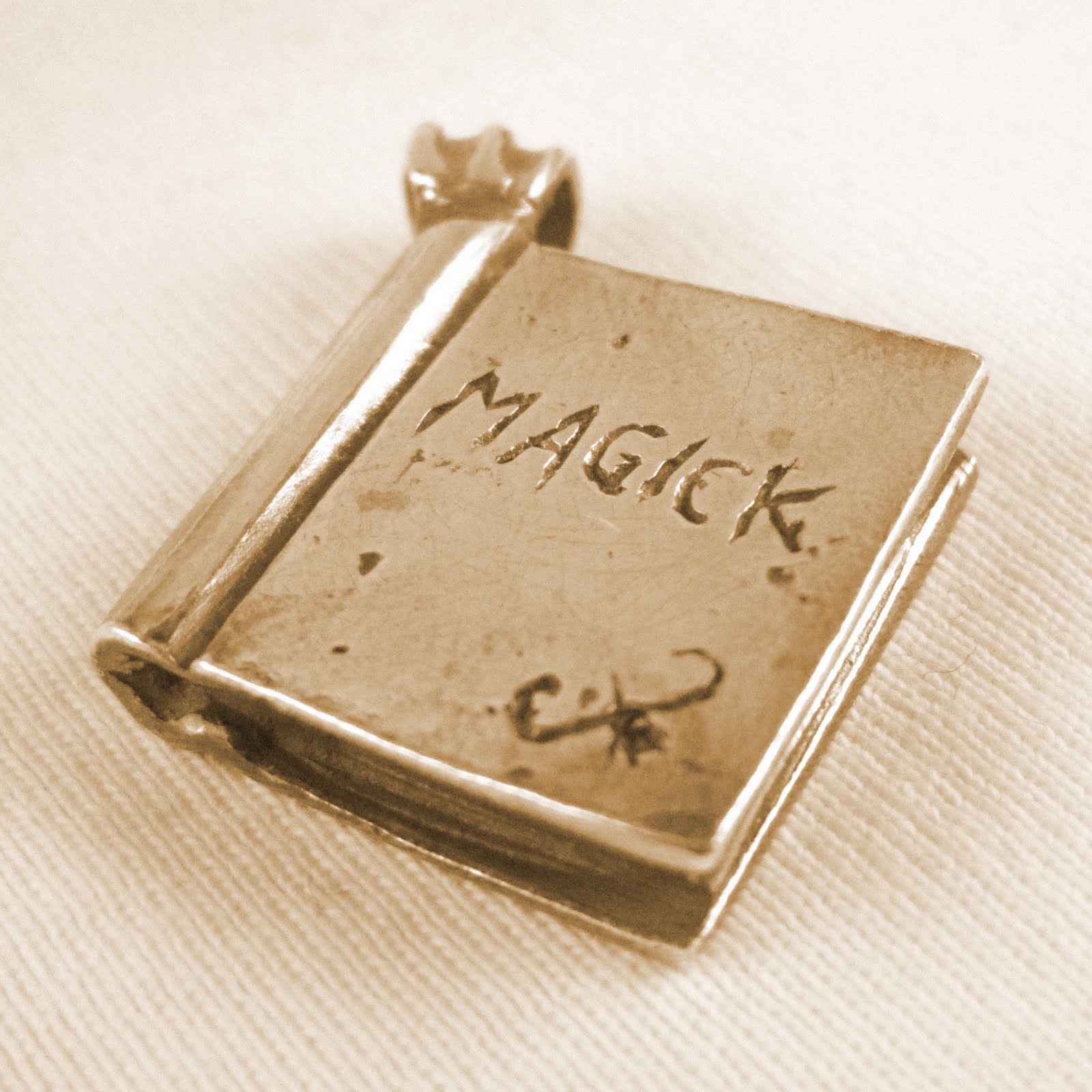
Hi everyone! Today is the day that Stephanie Burgis is giving away one of the pendants I designed. It's the Magick Book from Kat, Incorrigible. Head on over to her blog, http://stephanieburgis.livejournal.com/233924.html, to enter. And then, late next week, it will be for sale in my Etsy shop.

Wednesday, March 16, 2011

Book Jewelry!

Magick Front by EmilyMah
Magick Front a photo by EmilyMah on Flickr.
Sorry it's been a while since I've posted. Life's been insane - and I'm sure all of you can relate. I figured I'd share this project though, as it is book related. This April 5th, Stephanie Burgis's book, Kat Incorrigible, comes out in the United States, and I'm doing tie in jewelry! That picture is of the rough draft of the Magick Book pendant that will come out the same day as the book. We're doing one more version that will be much cleaner and more ornate.

Steph and I were both classmates at Clarion West back in 2001, and she's one of those people whom I'd hate if I didn't love her so much. While I struggled to thrash my ideas into the short story format, she'd receive the assignment for that week and show up a couple of days later with a gorgeous story that executed it. For her last week, her story had the climax in flashback, at the beginning, and the whole piece felt beautifully balanced and held my attention in a white knuckled grip from beginning to end - and this was after six weeks of me reading sixteen stories a week (though it seemed that Stephanie also consumed several novels and short story collections on top of reading the workshop material.)

So it was no surprise to me that I LOVED Kat Incorrigible. I read the UK edition, titled A Most Improper Magick. I can't recommend this novel highly enough.

Since I run my own little shop on Etsy, stocked with my handmade jewelry, and since I was taking a course in wax carving and investment casting, I thought I should start approaching authors to ask if I could obtain a derivative works license to do jewelry from their books. I started with Stephanie (figured I'd aim high) and she's been wonderfully supportive and enthusiastic. Run, do not walk, to get a copy of her book when it comes out!

Wednesday, February 23, 2011

Are You Ready?


My dear  bloggie friends:

I am SO glad to have this chance to have your ear. I have this *very important message from David Farland:


David Farland’s Daily Kick in the Pants—Changing Times
 

As I’ve been forecasting since last April, we’ve seen some huge changes in the publishing industry this year.

In the latest news, Borders has filed for bankruptcy here in the United States. Borders of course is the second largest bookstore chain in the United States, but they failed miserably at keeping touch with the changing times. The mistake? They didn’t respond to the online threat from Amazon.com, and they didn’t put together a program to sell electronic books.